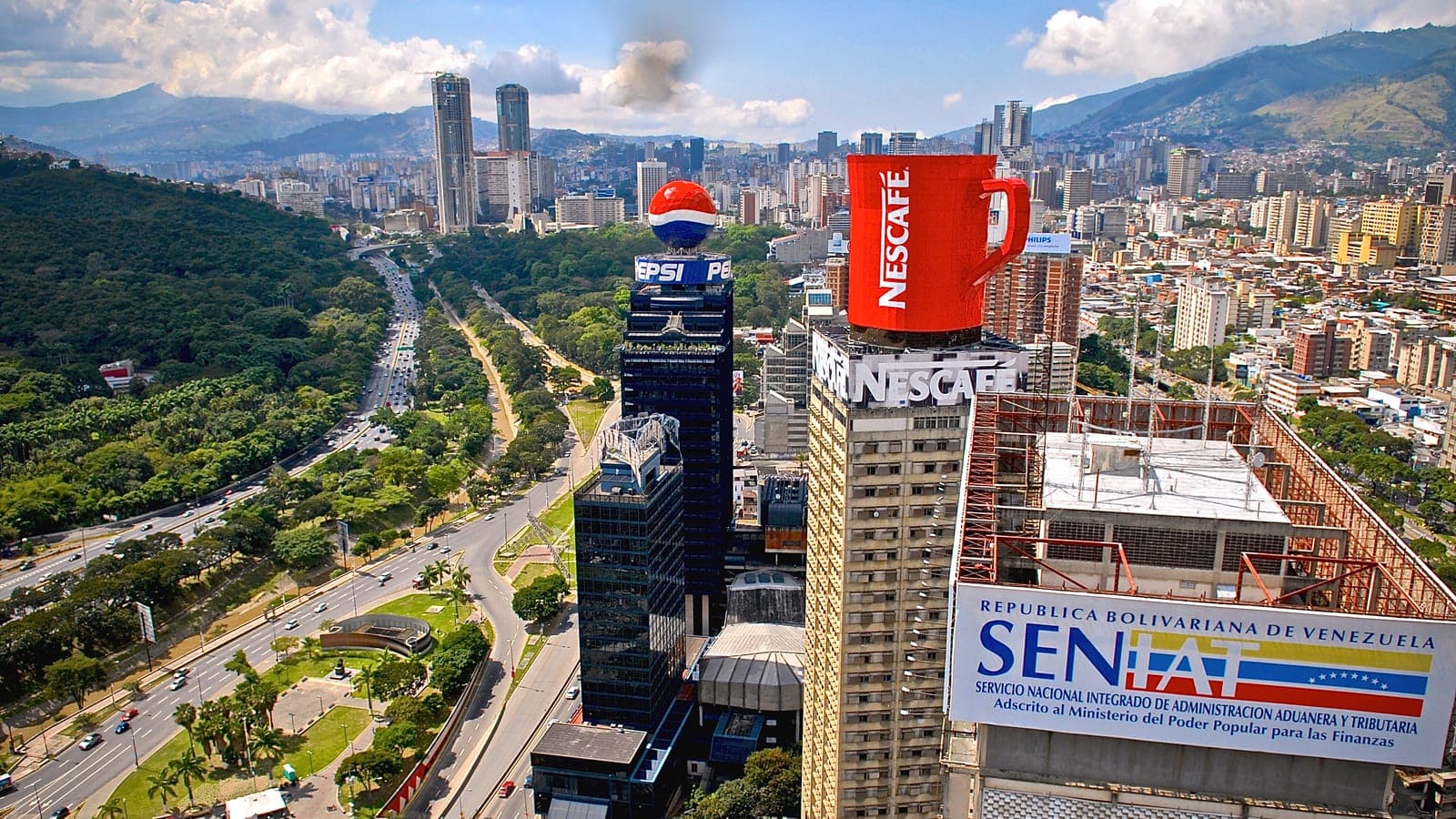
About the city
Caracas, officially Santiago de León de Caracas, is the capital and most populous city of Venezuela, set in a narrow mountain valley at 900 metres above sea level, flanked by the Ávila massif to the north and the Gran Sabana to the south. Founded on 25 July 1567 by Captain Diego de Losada, the city grew slowly through the colonial centuries before becoming, in the twentieth century, the nerve centre of the oil boom that transformed Venezuela into one of Latin America's most prosperous economies. It is the birthplace of Liberator Simón Bolívar, born here in 1783, and its history concentrates the birth of republican ideas that radiated across the rest of the continent.
In the field of sport, Caracas has a tradition as intense as its political history. The Leones del Caracas are one of the most decorated baseball teams in the entire continent, with the Monumental Stadium — capacity 40,000 — as their cathedral. Football, basketball, and athletics find their most emblematic stage at the UCV Ciudad Universitaria, a UNESCO World Heritage Site since 2000: the Olympic Stadium designed by Carlos Raúl Villanueva hosts both the athletics track and the most important Venezuelan football matches. In 1983, Caracas organised the IX Pan American Games, with 3,426 athletes from 36 countries — a milestone that marked an entire generation and left an unprecedented sports infrastructure in the country.
In the context of ACES Activa, Caracas's presence on the platform — though with a comparatively modest number of participants given the city's size — reflects the connection between the Venezuelan capital and the Ibero-American network of civic sport. Caracas has experienced profound transformations in recent decades that have strained the daily lives of its inhabitants, but popular sport — neighbourhood leagues, baseball on any open ground, running circuits in Parque del Este — remains a common language that cuts across all layers of the city.
Key facts
Events
Events registered on the platform
- Festival Deportivo de Fútsala Comunal Caracas RenaceSep 20, 2026SAD 2026Futsal
- Entrenamiento MixtoSep 19, 2026SAD 2026General physical activity
- Entrenamiento MixtoSep 18, 2026SAD 2026General physical activity
- Entrenamiento MixtoSep 18, 2026SAD 2026General physical activity
- Kikimvol y voleibolSep 16, 2026SAD 2026Football
- Actividades deportivasSep 16, 2026SAD 2026General physical activity
- FutsalSep 16, 2026SAD 2026Futsal
- Entrenamiento de fútbol campoSep 16, 2026SAD 2026Football
- TALLER DE FORMACION DE FORMADORES PARA LA MASIFICACION DE LA ACTIVIDAD FISICASep 21, 2025SAD 2025
- CARACAS RUEDA LIBRESep 21, 2025SAD 2025