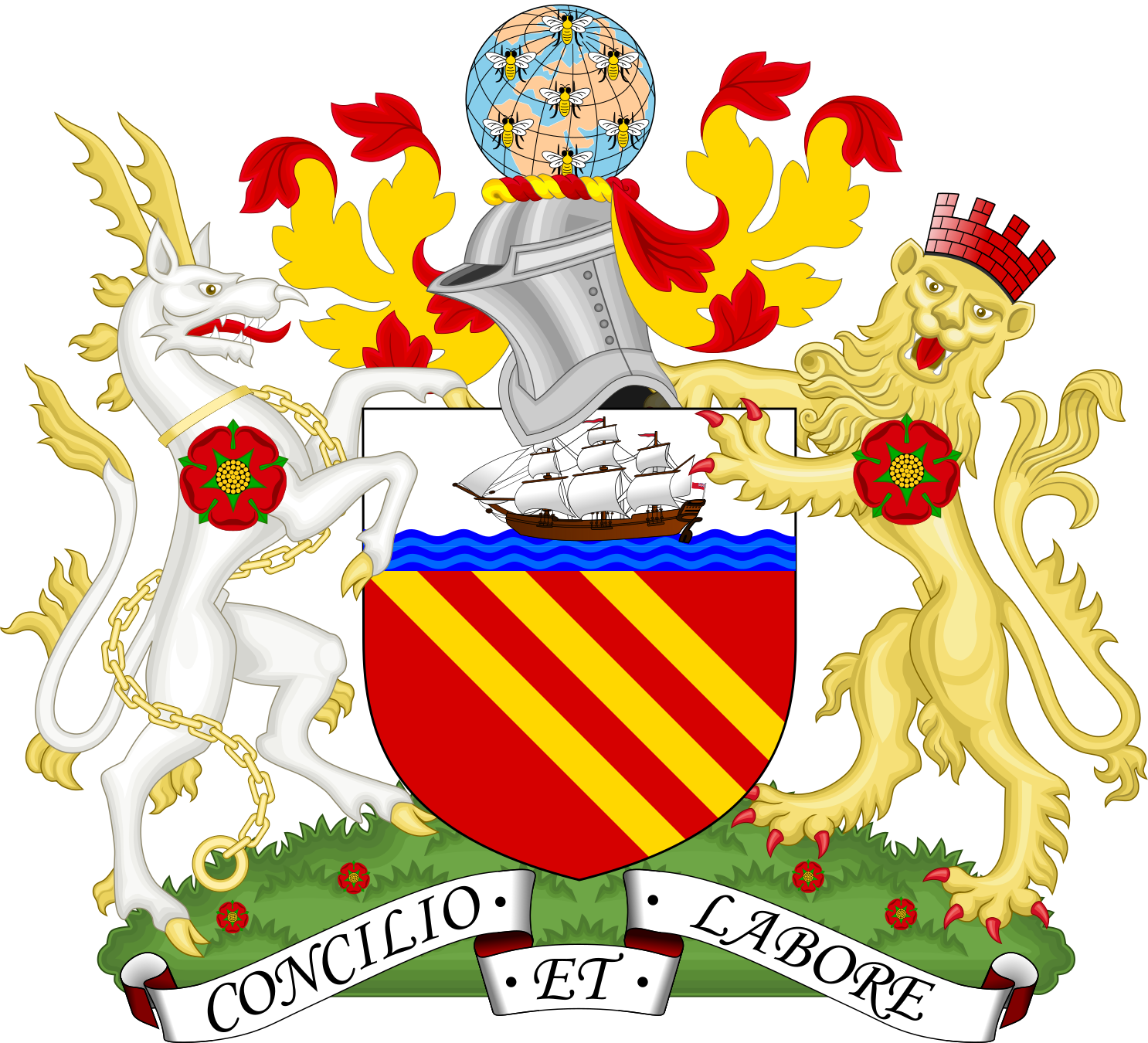

About the city
Manchester is a city in the north-west of England, with almost 570,000 inhabitants, and the core of the county of Greater Manchester. Its origins go back to the Roman fort of Mamucium, built around AD 79, but its great transformation came with cotton: 'Cottonopolis' is regarded as the world's first industrialised city. In 1830 the Liverpool and Manchester Railway opened, the first passenger service between two cities, and in 1894 the Manchester Ship Canal opened its port to ocean-going ships. Today Greater Manchester's Bee Network brings together cycling and walking routes with train, tram and bus.
Two of the great clubs of English football, Manchester United and Manchester City, are based here. Old Trafford hosted matches of the 1966 World Cup and Euro 96 and the 2003 Champions League final, and Old Trafford cricket ground has staged matches at five Cricket World Cups, including those of 1975, 1979 and 1983. The 2002 Commonwealth Games left the city the City of Manchester Stadium, the aquatics centre and the velodrome. The latter, the National Cycling Centre, opened in 1994 as Britain's first indoor cycling track, is home to British Cycling's headquarters and has hosted three UCI Track Cycling World Championships (1996, 2000 and 2008); since 2011 it has been complemented by the National Indoor BMX Centre, the only permanent indoor BMX track in the United Kingdom.
ACES Europe named Manchester European Capital of Cycling 2024, the first city on the list for this category, which passes to Konya in 2026. The recognition suits a city that hosts the headquarters of British cycling and that, through the Bee Network, is working to bring the bicycle into everyday travel, in a city where cycling still accounted for 2% of journeys in 2023. The title places Manchester within the British representation of the ACES network.
Key facts
Events
Events registered on the platform
No events registered yet