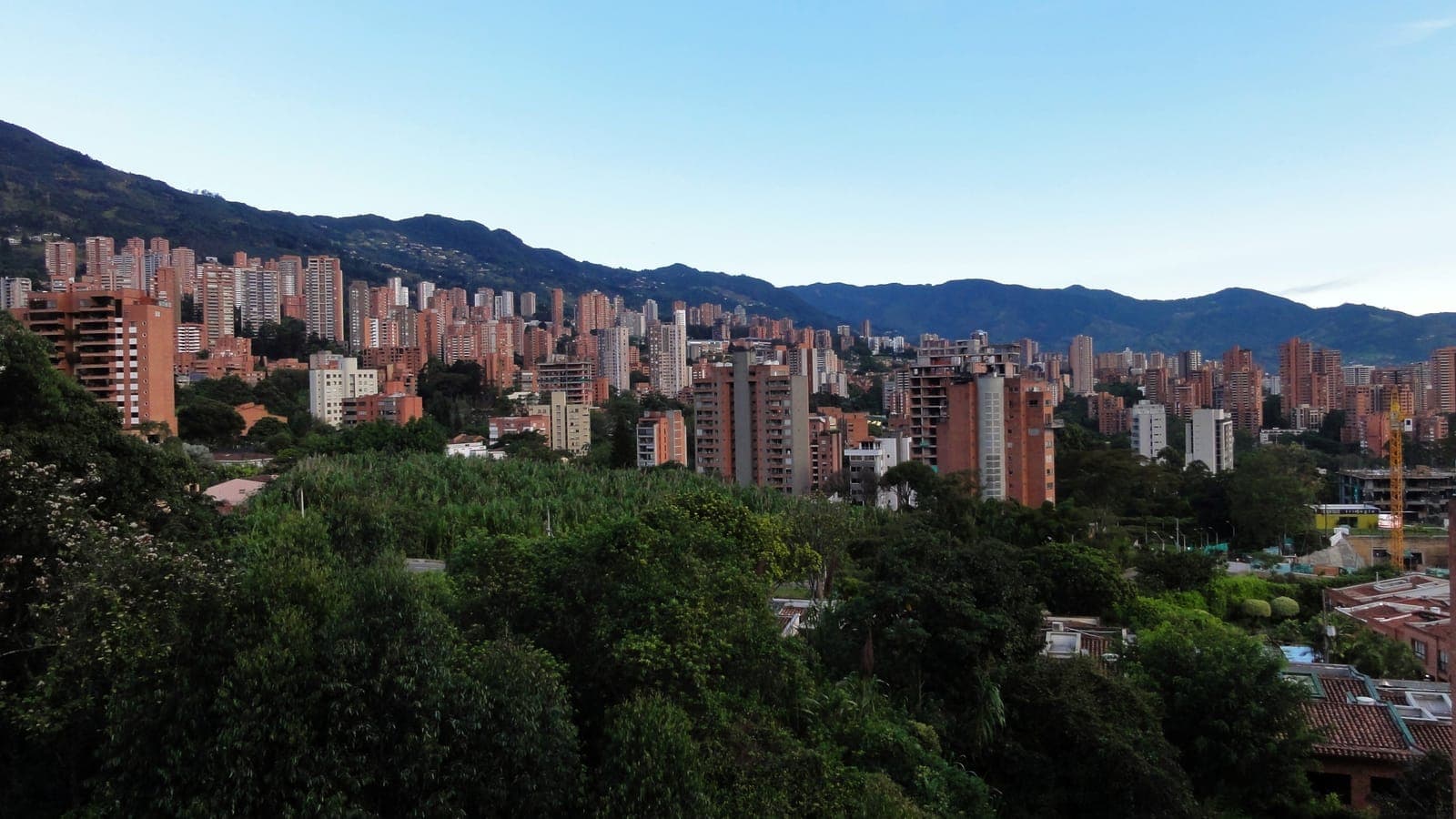
About the city
Medellín is the capital of the department of Antioquia and Colombia's second most populous city, with over 2.5 million inhabitants in the municipality and nearly four million in the greater Valle de Aburrá metropolitan area. Situated at 1,479 metres above sea level in the Central Andes, it enjoys a steady average temperature of 22 °C that earned it the historic epithet 'City of Eternal Spring'. Today, however, it is better known for an unprecedented transformation: in less than three decades, it went from being labelled the world's most violent city to becoming a global benchmark for social urbanism, civic innovation, and quality of life.
That metamorphosis is inseparable from its bold investments in infrastructure and mobility. Medellín's Metro — the only one in Colombia — integrates metro lines, trams, cable cars, and buses, connecting neighbourhoods that had for decades been physically isolated from the urban centre. The electric escalators of Comuna 13 became an international symbol of territorial cohesion. Parques del Río, the grand linear park running along both banks of the Medellín River, now offers green, cultural, and sporting spaces to hundreds of thousands of citizens every week. This holistic vision earned the city the Lee Kuan Yew World City Prize, the world's most prestigious urban award.
In sport, Medellín boasts 836 public facilities distributed across the city and 18 major sports units, of which the Unidad Deportiva Atanasio Girardot stands out as an Olympic complex capable of hosting athletics, swimming, cycling, football, and multiple disciplines simultaneously. The city has hosted international competitions in cycling, athletics, and football, and has nurtured a deeply popular sports culture embedded across all social strata.
Medellín is also a Special District of Science, Technology and Innovation — a status that reflects its commitment to becoming Latin America's knowledge hub. With world-class universities, a vibrant entrepreneurial ecosystem, and a cultural scene that includes the International Poetry Festival (one of the world's most important in its genre), the city demonstrates that profound reinvention is possible when institutional will and civic energy align.
Key facts
Events
Events registered on the platform