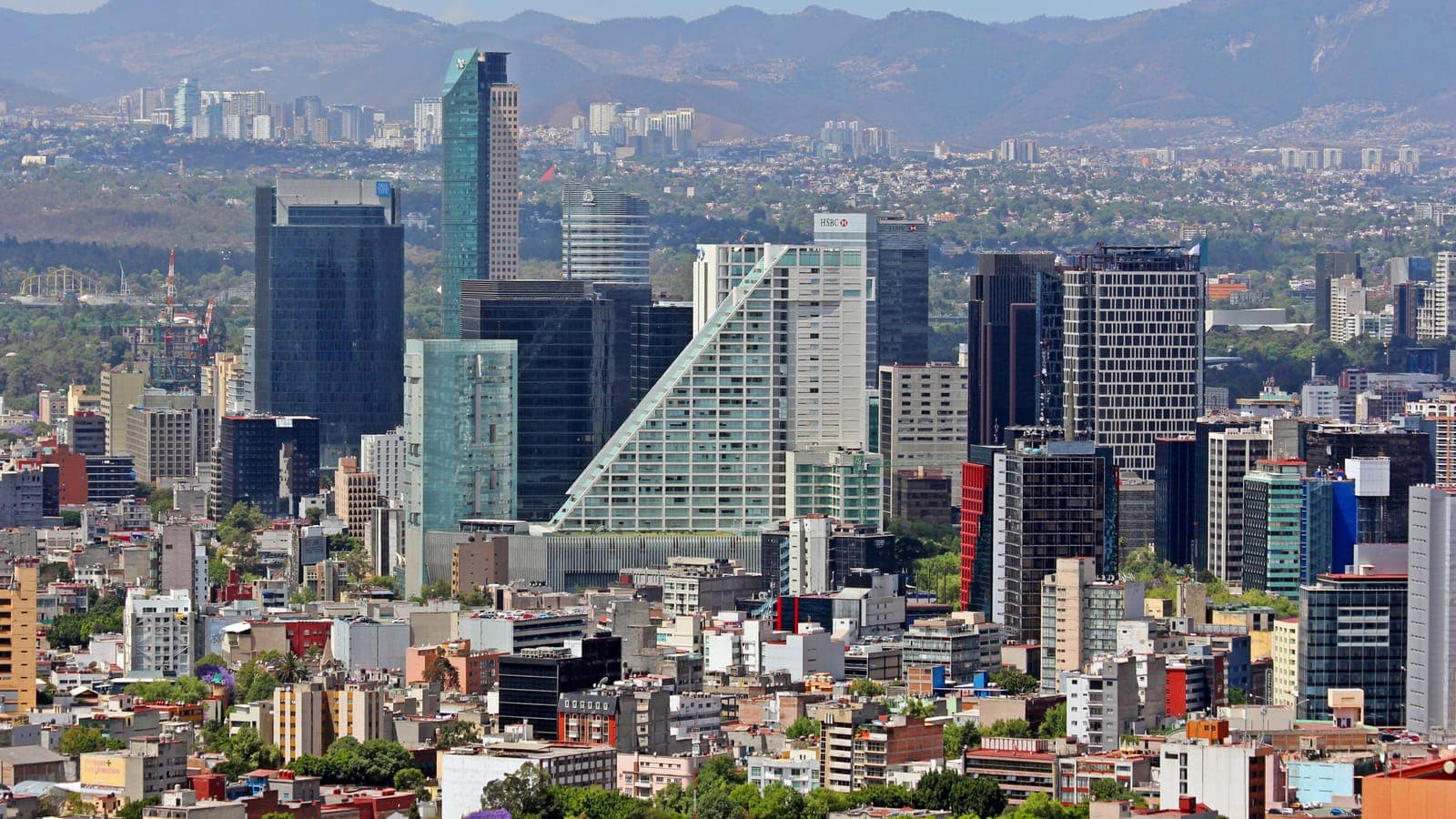
About the city
Mexico City spreads across the Valley of Mexico at an elevation of 2,240 metres, surrounded by volcanoes exceeding 5,000 metres. With 9,209,944 inhabitants in the city proper and more than 21 million in its metropolitan area according to the 2020 census, it is the largest urban agglomeration in the Spanish-speaking world. Its historic centre, together with the canals of Xochimilco, has been inscribed as a UNESCO World Heritage Site.
Founded as Tenochtitlan in 1325 on an island in Lake Texcoco, the city served as the capital of the Aztec Empire until the Spanish conquest of 1521. On its ruins rose the capital of New Spain, and the Templo Mayor, excavated in the 1970s, stands today alongside the Metropolitan Cathedral and the Zócalo, one of the largest public squares in the world. Chapultepec Castle, the Palace of Fine Arts, and the floating gardens of Xochimilco complete a monumental heritage of exceptional density.
Mexico City hosted the 1968 Olympic Games — the first held in Latin America — where Bob Beamon set the world long jump record (8.90 m) that stood for 22 years. Estadio Azteca, with a capacity of 87,523 spectators, is the only venue to have hosted two FIFA World Cup finals (1970 and 1986), and will host the opening match of the 2026 World Cup. The city is home to the Mexican Grand Prix at the Autódromo Hermanos Rodríguez and to three of the most decorated clubs in Liga MX — América, Cruz Azul, and Pumas UNAM — which together hold 33 league titles. The Mexico City International Marathon, rated Gold by World Athletics, draws more than 30,000 runners from 60 countries each year. The Ecobici network and the Sunday ciclovía along Paseo de la Reforma together form more than 230 km of urban cycling infrastructure.
Mexico City appears in the ACES Activa network as part of the ecosystem of participating Mexican cities. Its institutional scale and sports infrastructure position it as a continental reference for the promotion of community sport.
Key facts
Events
Events registered on the platform
- Paseo Dominical Muévete en BiciSep 27, 2026SAD 2026Recreational open streets
- Paseo Dominical Muévete en BiciSep 20, 2026SAD 2026Recreational open streets
- Paseo Dominical Muévete en BiciSep 13, 2026SAD 2026Recreational cycleway
- CLASE DE BOX DEPORTIVO VALLE ESCANDÓN MHJul 25, 2026
- MAXI CLASE DE ZUMBA ANÁHUAC MHJul 25, 2026
- ACONDICIONAMIENTO FÍSICO ADULTOS MAYORESJul 24, 2026
- Mentoria Reflectiva Liderazgo Paralímpico de las AméricasApr 2, 2026Abril
- Master Class Anclas Sensoriales de Liderazgo en el DeporteMar 26, 2026
- Paseo Dominical Muévete en BiciSep 21, 2025SAD 2025
- Muévete en Bici- paseo dominicalOct 6, 2024SAD 2024