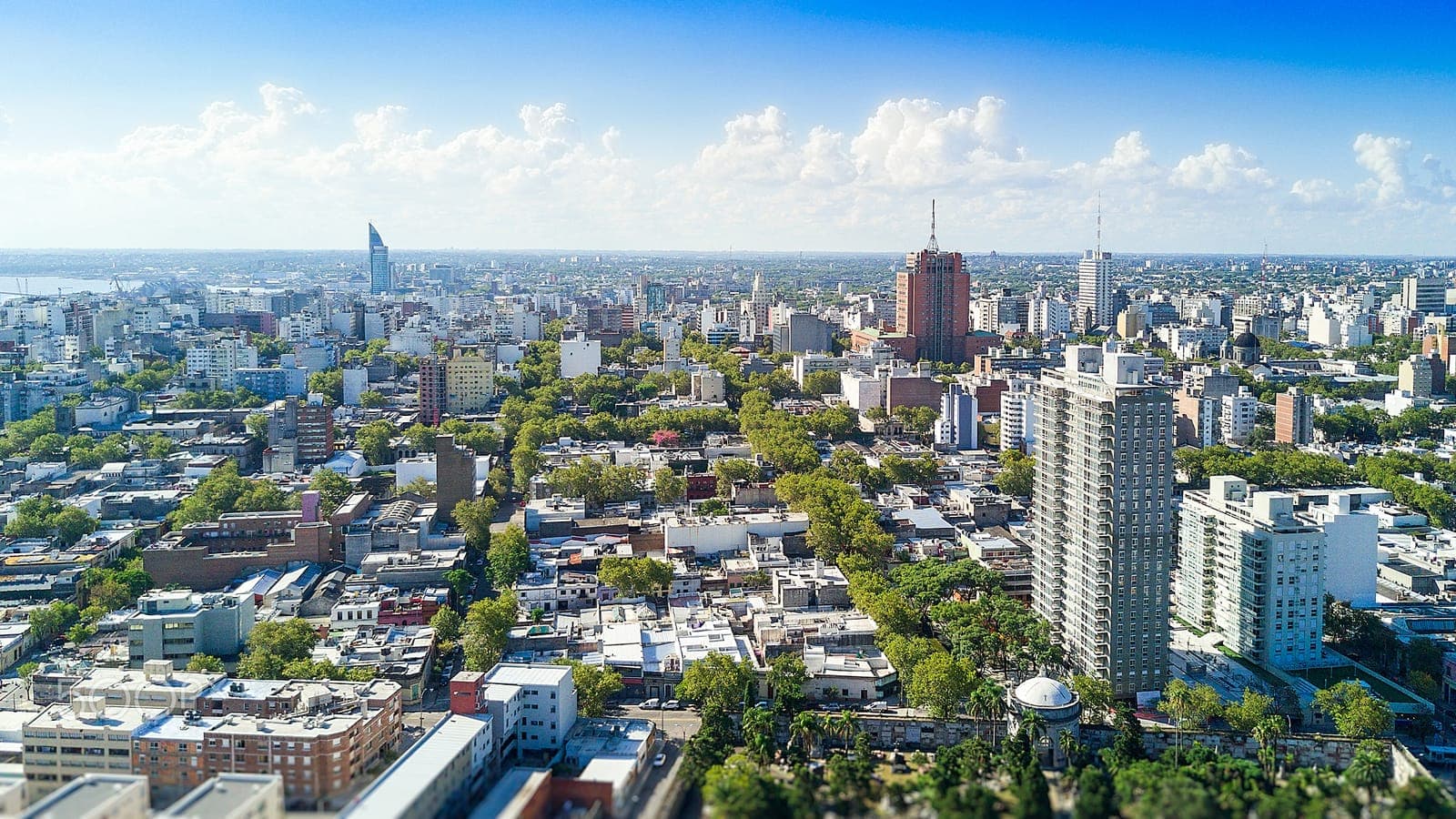
About the city
Montevideo, capital and heart of Uruguay, is the southernmost capital of all the Americas and one of the most singular cities in the world for its sporting history. It was on its streets that the founding myth of modern football was forged: in 1930 the Estadio Centenario hosted the first FIFA World Cup, and the sky-blue national team lifted the trophy before more than 90,000 spectators. That stadium, the only building in the world to hold the title of FIFA Historical Monument of World Football, remains the architectural and emotional symbol of Uruguayan sport.
Montevideo's sporting culture transcends football. The city that combined Olympic gold in 1924 and 1928 with the World Championship of 1930 and 1950 understands sport as a matter of national identity, something that permeates every level of society. The candombe rhythms, the longest carnival in the world, the coastal rambla where thousands of Montevideans run, walk and share every morning, and the neighborhood clubs that have been producing elite athletes for decades: all of it builds a sporting and community ecosystem without equivalent in cities of comparable size.
Today Montevideo seeks to extend that historical legacy into a modern, inclusive and accessible model of civic sport. The Antel Arena, the renewal of sports spaces at the Centenario Park, and integration into continental networks such as ACES America form part of a vision that combines pride in the past with ambition for the future. In a human-scale city where the Río de la Plata washes the rambla each evening, sport is the common language that unites more than 1.2 million inhabitants.
Key facts
Events
Events registered on the platform
- 5q. Edición Carrera Fundación Peluffo GuiguensApr 26, 2026Abril
- 5q. Edición Carrera Fundación Peluffo GuiguensApr 26, 2026Abril
- TESTING MARATON - 15 Y 30 KMApr 19, 2026Abril
- TESTING MARATON - 15 Y 30 KMApr 19, 2026Abril
- La Carrera de Todos - TELETONApr 12, 2026Abril
- La Carrera de Todos - TELETONApr 12, 2026Abril
- Actividad integradoraApr 11, 2026Abril
- Actividad integradoraApr 11, 2026Abril
- 5 K Veamos el AutismoApr 2, 2026Abril
- 5 K Veamos el AutismoApr 2, 2026Abril