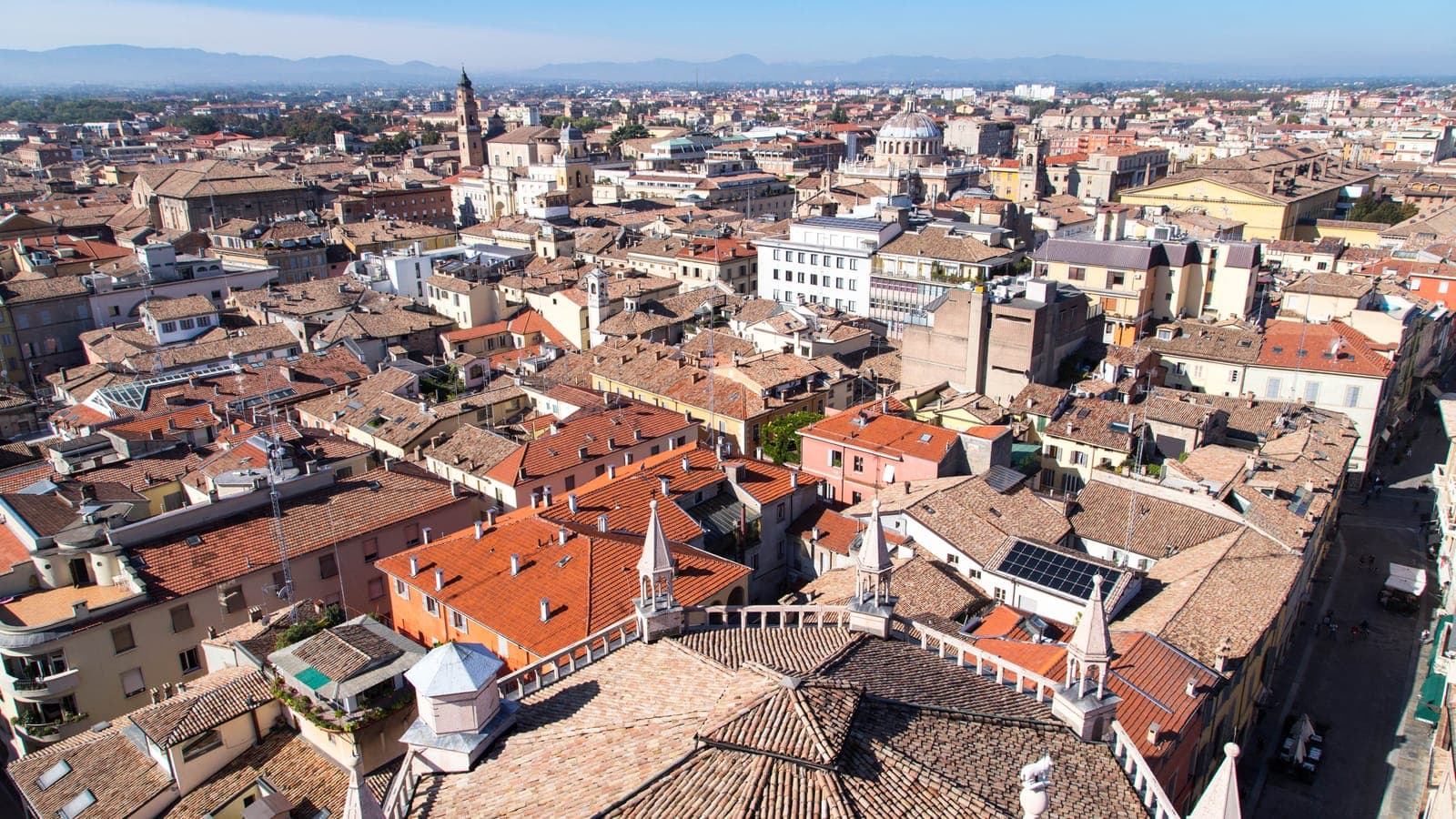

About the city
Parma is the capital of the province of the same name and the second city of Emilia-Romagna by population after Bologna, with around 200,000 inhabitants according to 2026 ISTAT data. Set in the western part of Emilia, between the Apennines and the Po plain, it is divided in two by the Parma torrent and became a Roman colony in 183 BC, on the Via Emilia. It was the capital of the Duchy of Parma and Piacenza from 1545 to 1859, has been a university seat since the 11th century and preserves, around Piazza Duomo, the Romanesque cathedral consecrated in 1106, with its dome painted by Correggio, and Benedetto Antelami's baptistery, clad in pink Verona marble. Home to the European Food Safety Authority (EFSA) since 2004, it has been a UNESCO Creative City of Gastronomy since 2015 and was Italian Capital of Culture in 2020, a title extended to 2021 because of the pandemic.
The city's great sporting flagship is Parma Calcio 1913, which between 1992 and 2002 won three Coppa Italia titles, one Supercoppa Italiana, two UEFA Cups, one European Cup Winners' Cup and one European Super Cup; it plays at the Stadio Ennio Tardini, opened in 1923, and competes in Serie A in the 2026–27 season. Parma is also home to Zebre Parma, an Italian side in the United Rugby Championship, and has a long baseball tradition, with the ten league titles of Parma Baseball.
Parma was one of the European Cities of Sport 2011, a title assigned by the ACES Executive Committee in December 2009 and shared with the Italian cities of Treviso and Trieste and six other European cities. In the letter explaining the award, the president of the ACES Italia commission highlighted the quality of its facilities and its projects for older people, young people and people with disabilities.
Key facts
Events
Events registered on the platform