About the city
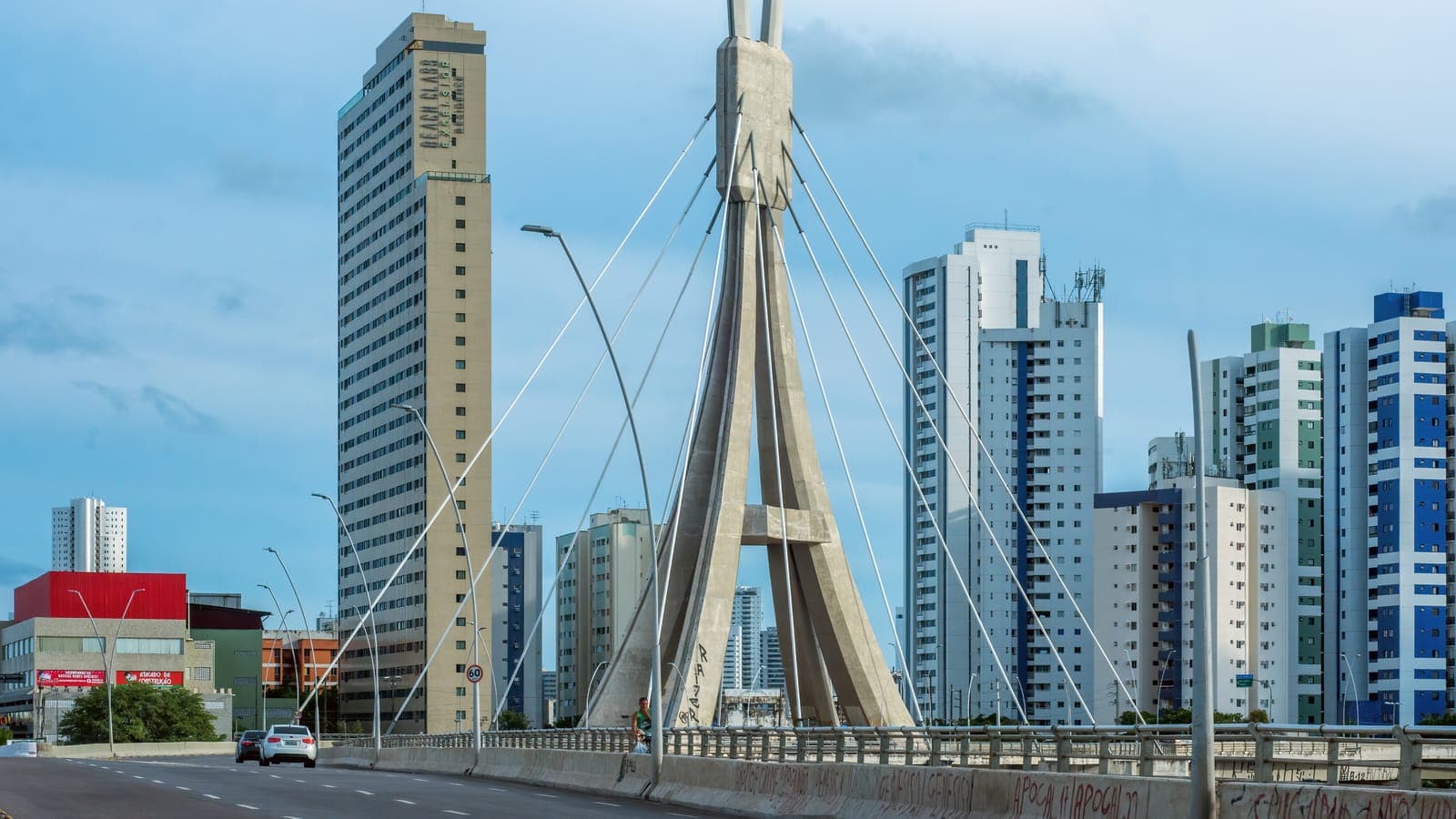
Recife, capital of the state of Pernambuco in north-eastern Brazil, stands on an alluvial plain of islands, peninsulas and mangroves where the Capibaribe and Beberibe rivers meet the Atlantic, a landscape crossed by bridges that has earned it the nickname of the 'Brazilian Venice'. Its origins go back to 1537, when the charter of Olinda referred to the 'Arrecife dos Navios', a settlement of sailors and fishermen beside the harbour, and it is the oldest of the Brazilian state capitals. Between 1630 and 1654 it was the capital of New Holland under the Dutch West India Company, a period that shaped its urban development. With almost 1.5 million inhabitants at the 2022 census, it is one of the country's great metropolises and the birthplace of frevo, the music and dance of its Carnival, inscribed by UNESCO on the list of the Intangible Cultural Heritage of Humanity.
Sporting passion in the city revolves around three clubs with their own grounds: Sport Club do Recife, who play at the Ilha do Retiro and won the Copa do Brasil in 2008; Santa Cruz, owners of the Arruda, the largest stadium built in the city; and Náutico, owners of the Aflitos. Recife was one of the six host cities of the 1950 World Cup, with a match at the Ilha do Retiro between Chile and the United States, and one of the twelve of the 2014 World Cup, whose matches were played at the Arena de Pernambuco, built in São Lourenço da Mata, within its metropolitan area. Beyond football, Sport's women's basketball team won Brazilian and South American titles between 2013 and 2014.
Recife took part in the American Week of Sport 2024 with activities open to the public published on ACES Activa. The platform brings together the physical activity programme that participating territories open to their residents during the campaign.
Key facts
Events
Events registered on the platform