About the city
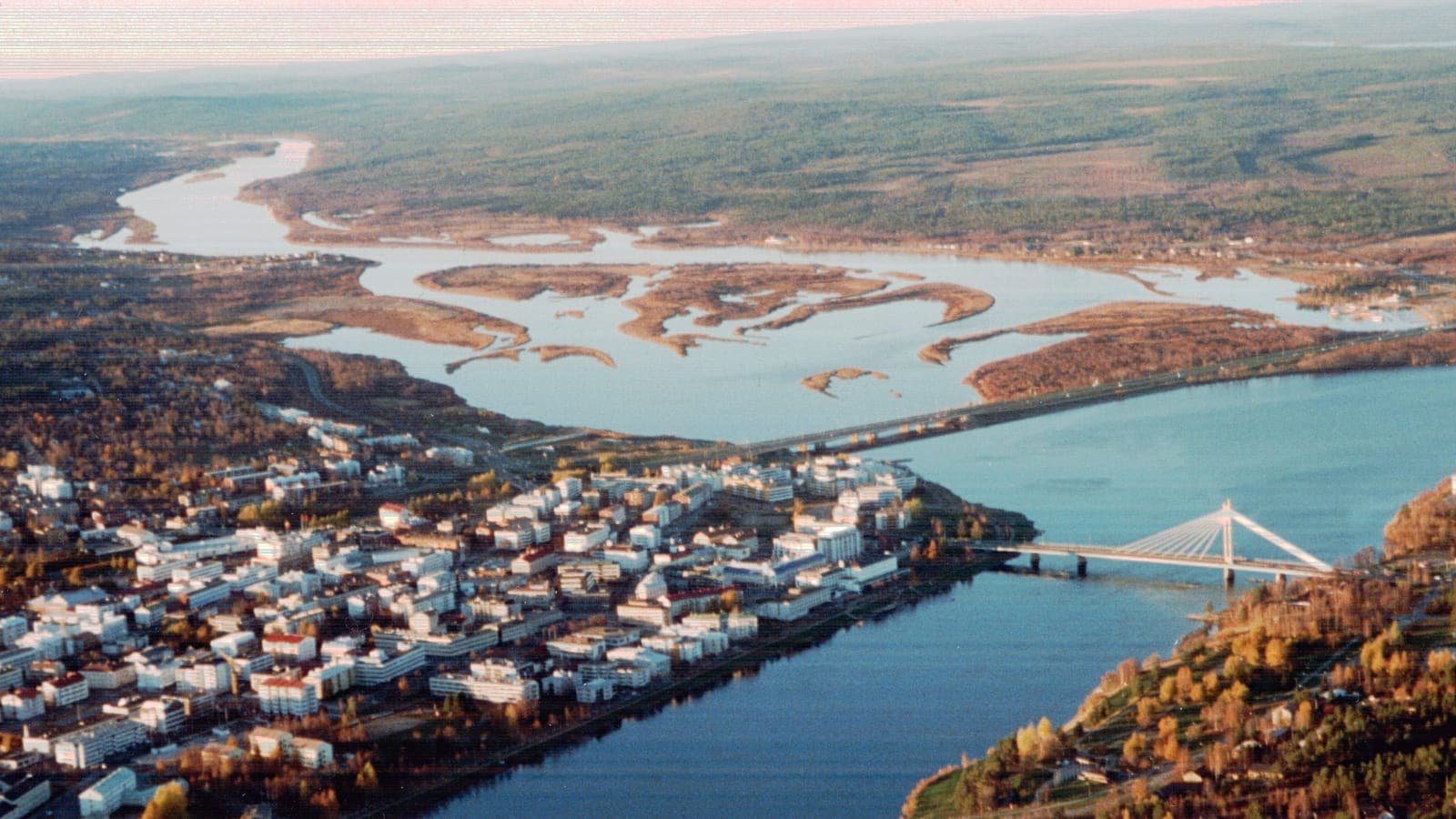
Rovaniemi was reborn in the shape of a reindeer. Capital of Finnish Lapland, on the Arctic Circle, it was razed in 1944 during the German retreat of the Lapland War — it lost around 90% of its buildings — and was rebuilt according to the plan drawn up in 1945 by architect Alvar Aalto: an urban layout that traces the antlers of a reindeer, with the head at the confluence of the Ounasjoki and Kemijoki rivers and, at the centre, the sports field as the animal's 'eye'. To that Arctic identity is added its fame as the home of Santa Claus, at the Santa Claus Village next to the Arctic Circle.
Rovaniemi's sport lives on the hill of Ounasvaara, its great open-air complex. There stand six ski jumps — from the small K6 and K15 to the large HS70 and HS100 — nearly 200 kilometres of cross-country ski tracks, one of the first snow tracks of the season in Finland and an alpine area with ten slopes, 600 metres of maximum descent and five lifts. The complex is run by the Santasport Lapland Sports Institute, one of the country's Olympic training centres.
Rovaniemi was distinguished by ACES Europe as European City of Sport 2020. According to the municipality itself, it was the first Nordic city to receive the title. The recognition extends the Finnish presence in the ACES network, opened by Suomussalmi as European Town of Sport 2018 and continued by Sotkamo in 2023, and places the capital of Lapland as a benchmark for Arctic sport.
Key facts
Events
Events registered on the platform
No events registered yet