
About the city
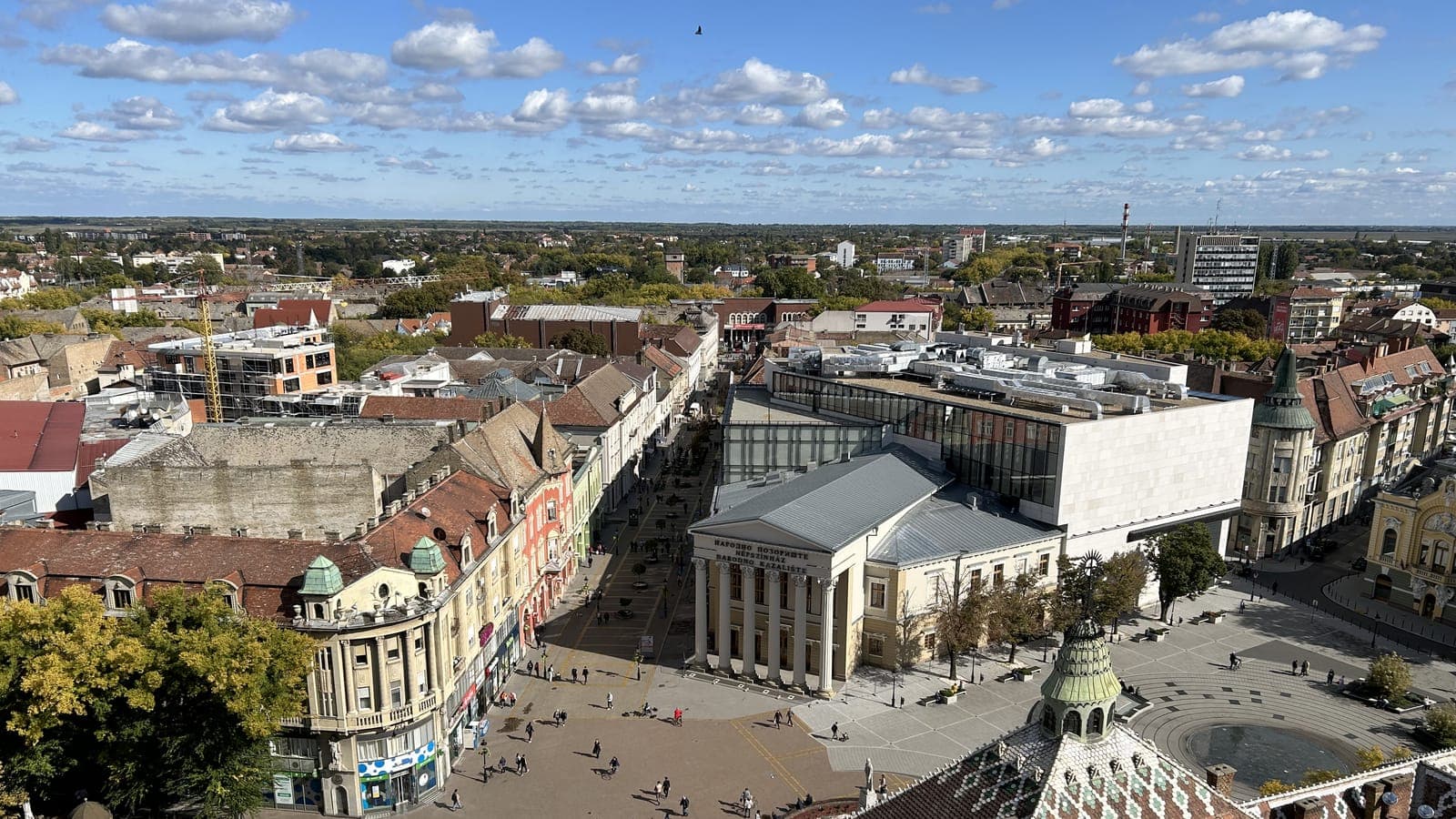
Subotica is the northernmost city in Serbia and one of the most fascinating examples of multicultural coexistence in the Balkans. Located on the Pannonian Plain of Vojvodina, just 10 kilometres from the Hungarian border, the city has been for centuries a meeting point for peoples and cultures: Hungarians, Serbs, Croats and Bunjevci have shaped a unique collective identity visible in its architecture, cuisine and everyday life. In 1779, Empress Maria Theresa of Austria granted it the status of Free Royal Town, a recognition that spurred its development as an administrative and cultural hub of the region.
Subotica's architectural heritage is exceptional. Its City Hall and Synagogue, both in the Art Nouveau style, are benchmark works of that artistic movement in Central and South-Eastern Europe. The city has preserved this heritage as a hallmark of its identity and a tourist attraction, while modernising its infrastructure to meet the demands of the 21st century. FK Spartak Subotica represents the local passion for football in the Serbian SuperLiga, and the municipal sports hall hosts competitions across multiple disciplines.
In 2024, ACES Europe honoured Subotica with the title of European City of Sport, recognising its sport-for-all programmes, investment in sports facilities and capacity to build social cohesion through physical activity. Its participation in the EWoS 2024 programme, with 15 registered events, is a concrete expression of that institutional commitment to sport as a tool for integration in a diverse society.
Key facts
Events
Events registered on the platform
- Horse Racing - Race of the City of SuboticaOct 13, 2024EWoS 2024
- Palić lake Duathlon - cycling and runningOct 13, 2024EWoS 2024
- Memorial Table Tennis Tournament Luka Andrašić - for people with disabilitiesOct 12, 2024EWoS 2024
- Fun Water GamesOct 11, 2024EWoS 2024
- A Night on the Lake - A Recreational Family RaceOct 5, 2024EWoS 2024
- Northstorm - OCR racingSep 28, 2024EWoS 2024
- Veterans tennis tournament, from city of Vukovar (Croatia) and SuboticaSep 28, 2024EWoS 2024
- Be active day Serbia - the central event of Serbia in Subotica - promotion of sports for all agesSep 28, 2024EWoS 2024
- A day of walkingSep 21, 2024EWoS 2024
- Tennis Cup - for children up to 10 years oldSep 21, 2024EWoS 2024