Cali put its sports venues at the service of the city after the earthquake
Cali's Sports Observatory documents how arenas, pitches and sports complexes took in families, aid and rescue teams after the earthquake of 10 August. The city has shared the study with the D+D Network and ACES America during the American Week of Sport.
Redacción ACES
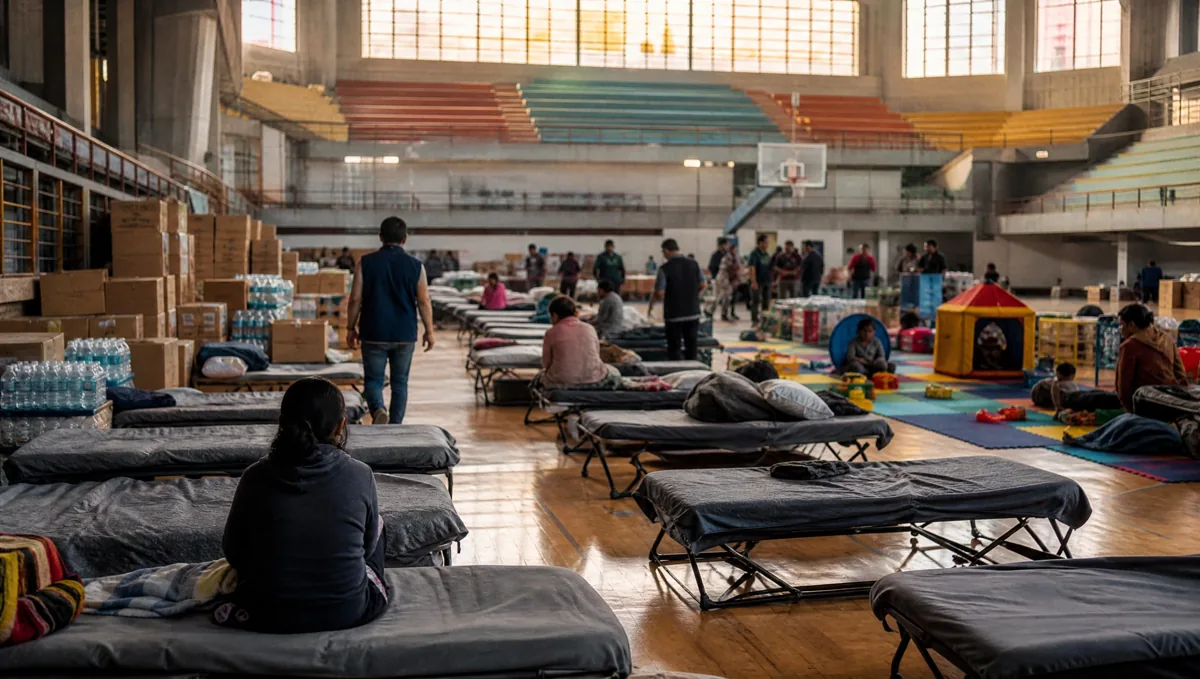
The national and international rescue teams who arrived in Cali after the earthquake of 10 August 2026 slept on the motorway football pitches inside the Jaime Aparicio Sports Complex. The Unified Command Post that coordinated the response operated from the basketball courts of the Alberto Galindo Sports Complex.
This is the account given by the Observatory of Sport, Recreation and Physical Activity (ODRAF) of Cali's Department of Sport and Recreation in "Sports infrastructure and its social function during times of catastrophe in the city of Cali", a study from October 2026 that the Department has shared with the D+D Cities Network and with ACES America. Its authors are María Margarita Aragón Luque, Raúl Torres Galeano, Antonio José Mejía Naranjo, Histor Jovanni Ramírez Abadía, Mario Fernando González Araque, Luis Fernando Molina Rosero, Patricia Álzate Mejía and Germán Darío Isaza-Gómez.
From training ground to shelter
The study goes through, venue by venue, the service each facility provided. The Miguel Calero Hockey Arena and the Miguel Chávez Baseball Diamond were initial collection centres and temporary shelters; the arena also offered psychosocial support, and a health care point operated in the area around the diamond. The Karate Do venue took in families. The CIDES Parque Los Pinos and the Coliseo Metropolitano del Norte opened their doors as shelters, and the sand pitches at Alberto Galindo supported the logistics of humanitarian aid.
Social welfare services, the Red Cross, health and ambulance teams, the Colombian Family Welfare Institute and the Family Ombudsman worked side by side in these spaces. There was even an animal welfare service for the pets of the families being housed, and the Departmental Library set up a play area for the children.
Documenting to be better prepared
The ODRAF team has carried out the work rigorously. It distinguishes what was reported from what is documented and from what can be proven, and on that basis it identifies what still needs to be gathered: the census of people housed, the handover records for each venue, the health providers and their shifts, the records of the play sessions. Its proposal is to build this experience into the city's preparedness plans and to define in advance how sports facilities can be used in a future emergency.
Cali in the American Week of Sport
Cali is one of the most active cities in the American Week of Sport. In 2025 it recorded more events and activities on the ACES platform than any other city: 1,082 in total. This year, with much of its effort devoted to the emergency, the Department still wanted to take part in the Week, and it did so by sharing this study.
Since 31 August, the city council has been gradually reopening its venues, following technical inspections and in coordination with the risk management office and the sports leagues. The Department is already planning its next measurement of events with the D+D Network.
More in this category
 City network
From Cali to Buenos Aires: the American network, on the map
More than thirty cities, towns and regions awarded since 2019 already form the ACES network of the continent — each with its own profile.
 City network
ACES highlights sporting transformation in Chorrillos, Lima: Beyond the game
The city of Chorrillos, Lima, received a visit from the ACES evaluation committee, who praised the extraordinary drive in investment allocated to sports facilities.
- City network
Report - City of Marcon, Venice - Italy. European Week of Sport 2022
The welcome words of the Mayor and the Sport Councillor of the City of Marcon, Venice,…